

Innovation, Simplification, and Competitiveness
As the European Commission’s new Digital Omnibus proposals land in Brussels, promising to ‘simplify’ AI, data, and digital rules, critics warn of a potential rollback. In parallel, work on the 28th regime and the European Innovation Act is framed as a way to reduce red tape and facilitate cross-border growth for startups and small and medium-sized enterprises (SMEs). Caught in the crosshairs, founders are trying to work out what this means for day-to-day compliance and their ability to scale.
At our recent ‘EU Digital Policy at a Turning Point’ event, conversations with ACT | The App Association members and EU policymakers crystallised what ‘simplification’ should actually look like in practice, and what must change if the next wave of EU digital rules is to reinforce, rather than unsettle, innovation and competitiveness.
What ‘simplification’ means inside the Commission 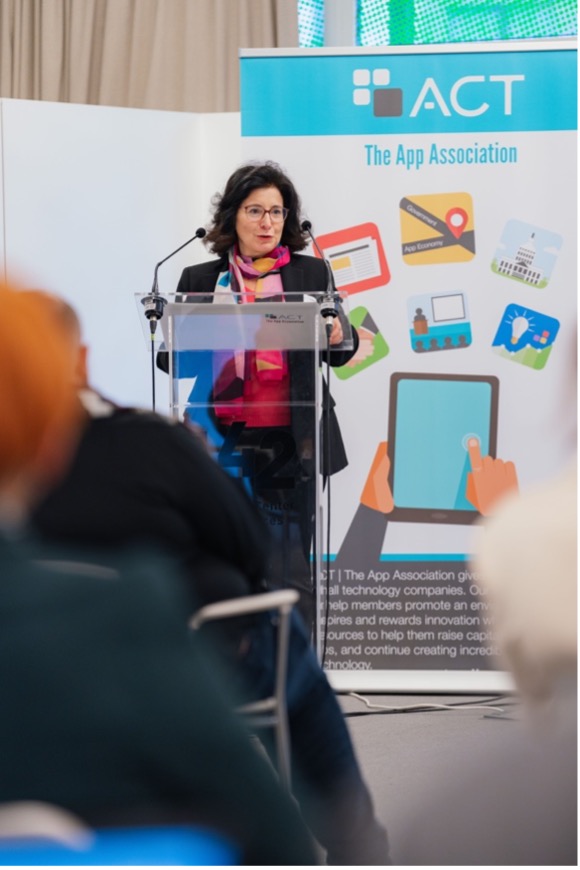
In opening remarks, Antonina Cipollone, Head of Unit for Better Regulation & Simplification at the European Commission, outlined how the Commission’s ongoing work focuses on regulatory simplification. She pointed to the digital and regulatory Omnibus packages, the ongoing fitness check, efforts to reduce administrative burdens for startups and SMEs, and work to strengthen digital infrastructure. Taken together, her message was clear: simplification is a central priority for the Commission’s current mandate and a lens through which upcoming digital files will be viewed.
SME opportunities and challenges with current EU regulations

Our conversation brought together Antonios Koulianos, Policy Advisor to MEP Dimitris Tsiodras (EPP); Theo Maiziere, EU Policy Manager, TechUK; Clément Sauvage, CEO, Bits’n Coffee Consulting; and Jim Beveridge, IP Fellow, Innovators Network. The discussion explored how Europe can streamline its regulatory landscape to help SMEs and startups scale more easily.
Speakers brought real-world experiences to the forefront, providing insight into the practical challenges young companies face when navigating EU rules and the support they need to grow sustainably. The discussion focused on the impact of EU regulations, including the Digital Markets Act (DMA) and the AI Act, highlighting the compliance burdens and uncertainty they impose on startups, scaleups, and SMEs while creating limited opportunities. The throughline was a call for smarter implementation, greater legal certainty, and proportionality, so that regulation supports innovation rather than slowing it.
Designing the next phase of Europe’s digital framework
A second discussion with Branislav Turcina, Policy Officer, European Commission; Mitchel Volkering, CEO, vaic.at, an ACT member company; and Rebekka Porath, IP Fellow, Innovators Network, looked ahead to the next wave of EU digital rules. The conversation moved from the withdrawn SEP Regulation to emerging ideas around the upcoming 28th regime and Innovation Act, to how Europe’s regulatory environment can foster SME growth, support standardisation, and strengthen Europe’s global competitiveness.
‘Honestly, it’s just a lot of compliance burden. We’re not handling it well. We’re hiring consultants, spending engineering hours, and losing money that should’ve gone to our team. Every time something like GDPR or the DMA drops, it bulldozes us’. – Mitchel Volkering, CEO, vaic.at, an ACT member company
Underscoring the SME perspective, Mitchel captured how this feels in practice. His experience reflects a broader concern we hear across our membership: even when each rule is defensible, the cumulative burden can divert scarce resources from hiring, product development, and market expansion.
What’s shaping the future of EU digital regulation
MEP Brando Benifei (S&D) closed the event by reflecting on the European Parliament’s role in implementing the AI Act, stressing that startups and SMEs need to be at the table throughout rather than treated as an afterthought. He highlighted the need to reduce compliance costs and improve coordination between EU and national authorities so companies are not left guessing how rules will be applied in practice.
Across conversations, one message resonated clearly: clarity and legal certainty now matter as much as access to capital or talent for anyone trying to grow and scale in Europe. To remain competitive on the global stage, the EU must ensure that its rules are intentional, workable, and informed by direct input from SME and startup founders.
We were honoured to be joined by all the speakers and members who contributed to this discussion. Your insights are essential to keeping SME realities at the centre of the EU’s digital rulebook and to shaping how we take these priorities back into the policy conversation.