
Introduction
Public discussion of the data center economy tends to center on a small number of large entities: the hyperscale cloud providers, the utilities that power them, and the multibillion-dollar campuses they build. That framing obscures the impacts on the nation’s small software and connected-device innovators, a constituency that is just as essential to the data center economy on both the supply side and the demand side. A resilient, secure, and domestically grounded data center supply chain has become a national economic and security imperative, and America’s small and medium-sized technology firms are central to meeting the challenge, both as suppliers of the software and devices these facilities depend on and as the innovators who put the resulting capacity to work.
ACT represents the global startup and small technology business community that drives the modern digital economy and fuels American competitiveness, growth, and job creation. ACT members implement, monitor, secure, and run data centers with the software and devices they build. And even more small businesses depend on the compute, storage, connectivity, and cloud services those facilities make possible in order to enter new markets, reach customers, deploy AI-enabled tools, and grow.
To explore small technology businesses’ relationship to America’s data center economy and related policies, this paper looks first at the barriers that small businesses face. Then, it looks at how small software and connected-device firms participate in the data center supply chain as providers of the software, sensors, and digital services that help build out and run these facilities. Finally, it explains why data center capacity has to be geographically distributed, and how small firms use and benefit from the resulting infrastructure to power the new cloud and AI processing capacity they need to compete.
Policy Recommendations
In concert with state policies, federal policy to support the continued expansion of the American data center economy is critical to startup and small tech growth and job creation and should be a national economic and security imperative. ACT recommends:

Shaping data center infrastructure policy to support American small business innovators
Federal efforts and programs should recognize that small software and device firms are primary users of data center capacity and should be designed so that capacity remains accessible to them.
- Permitting and siting predictability. Predictable, transparent permitting brings new capacity online faster, which directly benefits the small software and connected-device firms that need affordable cloud and AI capacity to compete.
- Support for distributed and edge capacity. Because latency requires capacity near users, policies that enable responsible data center development across more regions serve the latency-sensitive software and connected-device firms ACT represents, whose products must respond in real time, and they spread supplier opportunities to more communities at the same time.
- Affordable, reliable power and connectivity. Because ACT’s small business members are among the largest classes of data center users, policies that keep compute and energy costs reasonable directly protect their access. Regulatory approaches that raise the cost of cloud services fall hardest on the smallest users.
Small-business incentives
Federal incentives, grants, or siting agreements supporting data center development should enable small software and connected-device suppliers to compete to provide the monitoring, security, and management technology these facilities depend on.
- Set-asides in existing programs. Programs such as CHIPS Act extensions, Small Business Administration (SBA) loans, and U.S, Department of Agriculture (USDA) guaranteed loans should reserve a share for small software, sensor, and connected-device companies that supply data center monitoring, security, observability, and energy-management tools.
- Targeted tax credits and grants. Tax credits, vouchers, or matching grants should support startups and small technology companies that are (1) developing and deploying edge computing solutions to support distributed capacity and help smaller firms compete, or (2) adopting cloud and AI services. These measures would lower barriers, especially for the smallest firms, where adoption currently lags.
Supporting a secure data center supply chain
Federal data center policy should account for the American software developers and connected-device makers who supply the monitoring, control, security, and management layer that keeps these facilities running. Programs and data collection that track who benefits from data center investment should make this digital supplier tier visible. Efforts to expand domestic production of the sensors, devices, and components that data centers and connected products rely on create opportunities for small connected-device makers and strengthen the supply-chain resilience the broader app economy depends on.
Fact-based public engagement
Federal leadership in surfacing rigorous economic data on data centers, including the role of small software and connected-device firms as both suppliers and users, supports informed local decision-making and a fuller public understanding of who the data center economy serves. More work is needed to quantify startup and small technology businesses contributions (both supply and demand) and cost impacts to inform better policymaking.
Conclusion
Countless small software and connected-device firms help instrument and run these facilities and depend on the cloud and AI capacity those facilities provide to start up, operate, reach customers, and now to build AI-enabled products at scale. A strong, secure, and domestically grounded data center supply chain is a national economic and security imperative, and these small firms are central to meeting it. Federal policy that recognizes both roles will produce an American data center economy that supports the next wave of American innovation.
Barriers Small Businesses Face
For all their importance to the data center economy, startups and small technology businesses face real and growing barriers to taking full part in it. As users of data center capacity, the smallest firms are the most dependent on affordable and accessible cloud and AI services, yet they are the least able to absorb rising costs or to wait out the permitting and construction delays that hold back new capacity. A large enterprise may negotiate customized cloud contracts, reserve compute, or build private infrastructure. A small developer generally cannot. When capacity concentrates in a few large hubs, latency-sensitive tools or services are left far from the customers they serve, and policies that drive up the cost of compute, energy, or cloud services weigh most heavily on the smallest firms. Cloud and AI adoption still lags among these firms, even though they have the most to gain from it.
As suppliers, the small software, sensor, and connected-device companies that help build and run these facilities must compete for data center work against far larger incumbents, and they are often overlooked in the procurement processes, incentive programs, and economic data that shape data center policy. Federal efforts built around large construction and equipment firms can leave little room for this smaller digital-supplier tier, even as demand for the tools it provides grows. Lowering these barriers, on both the demand and the supply sides, is the aim of the recommendations later in this paper.
Small Businesses as Participants in the Data Center Supply Chain
Building and running a modern data center draws on a deep and diverse vendor base, and a growing part of it is software and connected-device work that ACT members build. According to the U.S. Census Bureau, spending on data center construction reached approximately $41 billion in 2025, up about 32 percent from the prior year and more than 340 percent from 2020.1 Federal Reserve researchers similarly estimate that nominal spending on data center structures rose from about $10 billion in 2021 to about $40 billion in the first half of 2025 alone.2 Total investment is far larger still once the digital layer (servers, networking gear, and the software that runs them) where ACT’s members take part is taken into account. As increased capacity becomes available, the firms that supply a data center’s software and connected devices, its monitoring tools, control systems, sensors, and management platforms capture a meaningful and growing share of the activity. Because so much of this layer is built by American small and medium-sized firms, a healthy domestic base of these suppliers is itself part of a secure and resilient data center supply chain.

The data center economy that ACT’s members build on is large and growing fast. A 2026 PwC analysis estimated that the U.S. data center industry supported roughly 5.5 million jobs and contributed about $927 billion to GDP in 2024 with each direct data center job supporting several more across the wider economy.3
Small businesses increasingly supply the digital layer a modern data center cannot run without. They build the infrastructure-management software that tracks power and cooling, the monitoring and observability tools that flag problems before they cause outages, the environmental sensors and controls that keep equipment within tolerance, the security software that protects the facility and its tenants, and the predictive-maintenance and energy-optimization tools that hold operating costs down. Many of these vendors are small firms. As facilities expand, the demand for the more automated and more energy-conscious software and connected devices startups and small technology companies make will grow alongside them.
Once a facility is operational, much of the recurring value to digital economy firms flows through software and cloud-delivered services. Operators rely on monitoring, analytics, security, and management tools delivered as subscriptions, and on the small developers who build integrations, dashboards, and automation on top of cloud platforms.
Small Businesses as Users and Beneficiaries of the Data Center Economy
The larger and more transformative story is on the demand side. The data center economy is the physical underpinning of the more than $700 billion cloud computing industry that lets a small business reach enterprise-grade technology at scale.4
It is important for capacity to be physically close to its users. Network latency, the delay between a request and its response, grows with the distance data must travel, so the industry places edge facilities near the users and devices they serve rather than concentrating everything in a few low-cost hubs.5 Because latency-sensitive products such as telehealth, real-time logistics, interactive media, cybersecurity services, and connected devices must respond in close to real time, the small firms that build them depend on having data center capacity reasonably close to their own customers.6
A distinct and often-overlooked group of beneficiaries is the independent software developers and small connected-device companies that build, deploy, and distribute their products through digital platforms.7
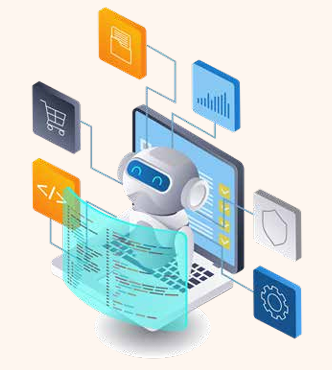
These firms write code in cloud environments, host and distribute applications from cloud infrastructure, and rely on cloud-delivered services to reach users worldwide. Many have only a handful of employees and depend directly on accessible, affordable, and reliable data center capacity located close enough to serve their users responsively.
Before cloud services, a firm that needed serious computing power had to purchase, house, and maintain its own servers, a capital expense that put advanced capability out of reach for most small businesses. Cloud infrastructure converts that fixed cost into a pay-as-you-go operating expense and removes the need for on-premises hardware and the staff to run it. A two-person startup can now provision the same class of compute and storage that once required a dedicated server room, and it can scale capacity up or down as demand changes. For ACT’s members, this shift from owning infrastructure to renting it is the single most important benefit of the data center economy. The pay-as-you-go cloud model removes the infrastructure barrier to entry and lets a small team enter markets that used to be closed to anyone without a large capital budget.
Generative-AI-specific cloud services, which grew on the order of 140 to 180 percent year-over-year in 2025,8 reach small firms almost entirely through data-center-hosted services. A firm with a handful of employees can now use AI for customer service, marketing, document processing, pricing, and analytics on a subscription basis without the data centers, specialized chips, or data-science teams that training and serving such models require. The data center economy is, in practical terms, the delivery mechanism that puts advanced AI within reach of the smallest innovators, and it is the capacity that ACT’s members need to build the next generation of AI-enabled products.
Approximately 18 percent of U.S. firms reported using AI in at least one business function, a share that rose to roughly 32 percent when weighted by employment and that businesses expected to climb further within six months.9 Federal Reserve researchers tracking the same period reported a comparable adoption rate and noted that firm AI use had grown sharply over the prior year.10 Adoption still runs lower among the smallest firms, which is exactly where affordable, cloud-delivered tools matter most, because they let a company pick up advanced capabilities without
building its own infrastructure.
The AI assistant, the algorithmic real-time marketing analysis tool, the e-commerce storefront, the cloud-hosted CRM, and other tools that small firms now rely on all run on servers sitting in a data center somewhere. For ACT’s members, data center infrastructure is the foundation the rest of their business now sits on.
1 U.S. Census Bureau, Value of Construction Put in Place. Data center construction spending reached approximately $41 billion in 2025, up roughly 32% year-over-year and more than 340% from 2020. The Census series excludes the cost of servers and racks but includes built-in cooling and electrical equipment. Available at https://www.census.gov/construction/c30/c30index.html.
2 Board of Governors of the Federal Reserve System, “Estimating Aggregate Data Center Investment with Project-Level Data,” FEDS Working Paper No. 2025-109 (2025), noting nominal spending on data center structures rose from about $10 billion in 2021 to about $40 billion in the first half of 2025, and that total investment substantially exceeds the structures themselves once high-tech equipment is included. Available at https://www.frbsf.org/research-and-insights/publications/board-of-governors/2026/01/estimating-aggregate-data-center-investment-project-level-data/.
3 PwC, “Economic Contributions of Data Centers in the United States, 2017–2023,” commissioned by the Data Center Coalition (2025). PwC subsequently updated these figures in May 2026 (“Economic Contributions of Data Centers in the United States,” 2024 data), reporting that the industry supported approximately 5.5 million U.S. jobs and contributed roughly $927 billion to GDP in 2024. Available at https://www.datacentercoalition.org/reports-and-publications.
4 Gartner, “Gartner Forecasts Worldwide Public Cloud End-User Spending to Total $723 Billion in 2025” (Nov. 2024), forecasting worldwide end-user spending on public cloud services of approximately $723.4 billion in 2025, up from $595.7 billion in 2024, an increase of roughly 21.5%. Available at https://www.gartner.com/en/newsroom/press-releases/2024-11-19-gartner-forecasts-worldwide-public-cloud-end-user-spending-to-total-723-billion-dollars-in-2025.
5 US Signal, “Does Data Center Location Matter for Cloud Services?” (2026). Available at https://ussignal.com/blog/does-data-center-location-matter-for-cloud-services/.
6 Equinix, “What Is an Edge Data Center?” (2024). Available at https://blog.equinix.com/blog/2024/09/12/what-is-an-edge-data-center/. Atlas, “Edge Data Center Location Planning” (2026). Available at https://atlas.co/blog/edge-data-center-location-planning/.
7 U.S. Bureau of Labor Statistics, Occupational Outlook Handbook, “Software Developers, Quality Assurance Analysts, and Testers” (2025), reporting approximately 1.7 million software developers employed in the United States in 2024, with overall employment projected to grow 15% from 2024 to 2034, much faster than the average for all occupations. Available at https://www.bls.gov/ooh/computer-and-information-technology/software-developers.htm.
8 Synergy Research Group, chief analyst John Dinsdale, Q2 2025 commentary. Available at https://www.srgresearch.com/articles/q2-cloud-market-nears-100-billion-milestone-and-its-still-growing-by-25-year-over-year.
9 U.S. Census Bureau, Business Trends and Outlook Survey, artificial intelligence supplement (data collected Nov. 2025 through Feb. 2026), reporting that approximately 18% of firms used AI in at least one business function, rising to about 32% on an employment-weighted basis, with adoption projected to reach 22% within six months. Available at https://www.census.gov/library/working-papers/2026/adrm/CES-WP-26-25.html.
10 Board of Governors of the Federal Reserve System, Jeffrey S. Allen, “Monitoring AI Adoption in the U.S. Economy,” FEDS Notes (Apr. 3, 2026), reporting that about 18% of firms had adopted AI as of year-end 2025 and that adoption grew sharply over the prior year. Available at https://www.federalreserve.gov/econres/notes/feds-notes/monitoring-ai-adoption-in-the-u-s-economy-20260403.html.