














What Will the Midterms Mean for Small Tech?


Taylor Downs
This year’s midterm elections seem like a referendum on technology in many ways. Campaigns used artificial intelligence (AI) to create a wide variety of ads. Voter sentiment on AI was one driving force behind Democratic gains in the House. Ballot measures across the nation condemned data center construction. And campaigns like the Ohio Senate race clearly juxtaposed two different approaches to tech policy.
But will this popular sentiment translate to real changes on Capitol Hill?
Not in the way you might think.
Big Changes on Key Committees
Even before a vote was cast in the general election, we were looking at a shakeup of the House Judiciary Committee. A staggering 14 members of the 44 on the Committee retired or ran for other offices. One significantly notable departure is former Rep. Darryl Issa, the longtime leading Republican on intellectual property (IP) issues. A handful of these vacancies trickle down to the Subcommittee on Courts, Intellectual Property, Artificial Intelligence, and the Internet (CIP)—a key subcommittee for IP issues in Congress—but with so many overall vacancies we can expect significant changes to the subcommittee as members move around. ACT is excited to work with the CIP subcommittee on intellectual property protection and standard-essential patent policy.
The House Ways and Means Committee also had many pre-election expected vacancies. This influential committee sets the agenda for marquee legislation, including tax and healthcare legislation that has an outsized impact on small technology companies, especially those building next-generation IoT devices. Here, Rep. Mike Kelly (R-PA), the top Republican on the Tax Subcommittee, has been re-elected and is likely to stay in place as the ranking member, but the top Democrat, Rep. Mike Thompson (D-CA) lost his race in a very close election. Moving to Democratic control and a new Subcommittee chair will mean some significant changes in focus. However, most of the business provisions that were part of the One Big Beautiful Bill Act (P.L. 119-21) are permanent, including the restoration of research and development expenditures that ACT successfully passed. We don’t expect them to be a major target. We will continue to work with the Tax subcommittee to ensure a fair playing field for our small business members.
At the Energy and Commerce Committee, the retiring top Democrat of the Commerce, Manufacturing, and Trade Subcommittee, Jan Schakowsky (D-IL), has several potential successors. Reps. Kathy Castor (D-FL) and Lori Loureiro Trahan (D-MA) both have significant interest in online safety regulation, and Rep. Trahan is the lead co-sponsor of the Frontier Risk Oversight, National Transparency, Independent Evaluation, and Reporting Act (FRONTIER Act, H.R. 9925), one of the more comprehensive AI regulation bills. This bill focuses oversight on large developers and the most advanced large language models and utilizes a risk-based approach, which ACT supports. We look forward to working with the committee’s members on privacy legislation.
Oversight on the Horizon
One of the major planks of many Democratic candidates’ campaigns this year was a promise of oversight for many Trump Administration departments and key individuals. While there are many potential avenues for investigation, one area with huge impacts on small businesses would be oversight of the U.S. Patent and Trademark Office (USPTO). The 119th Congress got the ball rolling on several concerning changes, including a hearing on patent fees where ACT President Morgan Reed testified. In his testimony and interactions with Members’ questions Reed highlighted other opportunities where Congress should act to ensure the USPTO functions effectively and supports small businesses. Members of the Subcommittee panel examined procedural changes that are inconsistent with the law and make it much harder to challenge weak or improperly granted patents.
Other possible oversight targets include the conduct of AI companies and social media platforms’ treatment of underage users. We may see these avenues for investigation take a back seat to flashier probes of the Department of War or the actions of the former Department of Government Efficiency, but the continued energy around children’s safety online will surely be an animating force for the Senate Judiciary Committee.
Data Dilemmas
Several key Senate races this year saw massive investment from AI companies as well as pro-AI and pro-data center political action committees (PACs). In other races, pro-AI incumbents were ousted by challengers. With Sen.-Elect Sherrod Brown’s return, we may see a renewed focus on AI regulation, data centers, and similar issues. The Senate Commerce Committee’s Consumer Protection, Technology, and Data Privacy Subcommittee will likely be chaired by Sen. John Hickenlooper (D-CO), who has traditionally favored thoughtful legislation on privacy and related issues. We expect pushes on issues such as AI regulation, online safety, and potentially data privacy this year. ACT will work with the Commerce Committee to ensure any privacy legislation includes our four P’s of privacy: Preemption, Protection against unauthorized access, a Path to compliance, and no Private right of action.
Share this post
Resources
More action
Resources to understand more on the topic
FTC Taxes Apps: Privacy Changes Result in Quarter Billion Dollar Cost to Education App Developers
ACT RESPONDS TO FTC REPORT ON “MOBILE APPS FOR KIDS”
COPPA – IMPROVED FOR BIG COMPANIES, NOT FOR EDUCATION STARTUPS
Attention: The Interwebs Are Not Private
What do we do about Privacy and Security? (according to the next President…and me)
Keep reading
Others on this topic
Behavioral Marketing – Like or Hate it, but Regulate it?
Association for Competitive Technology
TPS – It’s the Business Rules (Not the DRM) Stupid!
Association for Competitive Technology
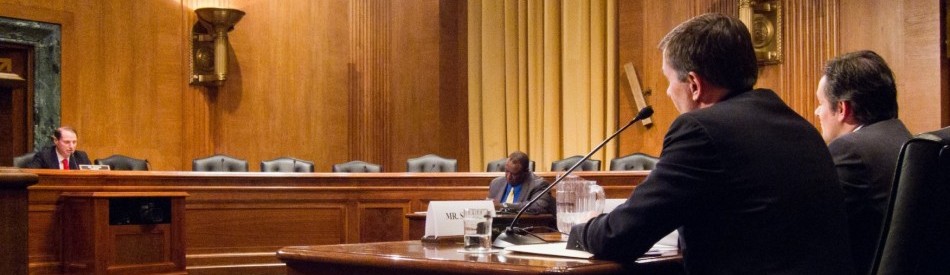
ACT Chairman Mike Sax Testifies before Congress on Trade
Association for Competitive Technology
Get in touch
Contact ACT
Whether you're a technology company looking to grow, or a policymaker seeking insight, we're here to help.
Get in touch to learn more about our work, explore membership, or connect with our team.
United States
United Kingdom
European Union