














Event Recap: Packed Hill Briefing on AICOA Highlights Risks for Small Businesses and Digital Innovation



Kedharnath Sankararaman
The small business voice is often hardest to hear in debates over “Big Tech” regulation. That was the central takeaway from ACT’s July 2 Hill briefing, AICOA is Back: What “Big Tech” Platform Regulation Means for Small Businesses.
The Association for Competitive Technology (ACT) hosted the packed briefing, with more than 100 attendees, to examine the reintroduced the American Innovation and Choice Online Act (AICOA) and what it could mean for small businesses, startups, independent developers, and the broader digital economy.
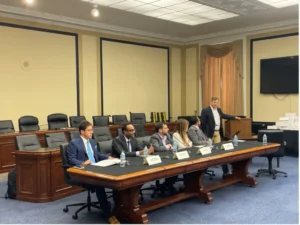 The conversation came at an important moment for American technology leadership. AICOA is framed as a bill targeting the largest technology platforms, but the panel made clear that its practical effects would reach much further. By moving U.S. competition policy closer to the European Union’s Digital Markets Act (DMA), AICOA would replace flexible, evidence-based antitrust enforcement with broad, upfront restrictions on common platform practices. That shift would create new uncertainty for the small businesses and developers that rely on integrated digital ecosystems to reach customers, protect users, and compete at scale.
The briefing opened with keynote remarks from Morgan Reed, president of ACT, who emphasized that the small business voice is too often lost in debates between and about trillion-dollar companies and billion-dollar companies. For small businesses, digital platforms are not abstract policy targets. They are the infrastructure that enables reach, trust, customer access, and growth in a fast-moving digital economy.
Following opening remarks, Kedhar Sankararaman, policy counsel at ACT, moderated a conversation with Joseph V. Coniglio of the Information Technology and Innovation Foundation, Jessica Melugin of the Competitive Enterprise Institute, Koustubh “K.J.” Bagchi of Chamber of Progress, and Chris Grimm of Developers Alliance.
AICOA Starts with the Wrong Assumption
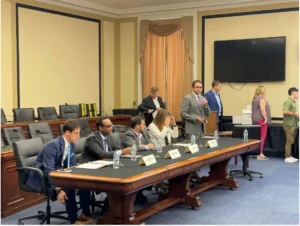 Panelists pushed back on the idea that digital markets need broad, preemptive conduct rules before showing actual harm. Traditional antitrust law requires case-by-case analysis, including evidence of market power, competitive effects, and consumer harm. AICOA would move in a different direction by applying restrictions based on revenue and user thresholds, then treating broad categories of conduct as suspect.
That includes self-preferencing, product integration, access to platform features, data use, default settings, ranking, tying, and the enforcement of platform terms. In practice, many of those activities can support security, privacy, product quality, fraud prevention, and consumer trust.
Joe explained how AICOA would make it harder for companies to show the procompetitive benefits of their conduct. That matters because the same platform practice that may look problematic in the abstract can be beneficial in context. In fast-moving digital markets, policy built around broad assumptions can miss how these ecosystems actually function.
Jessica also emphasized that digital markets are complicated, and broad ex-ante mandates do not fit neatly with how these ecosystems operate in practice. The United States is already actively litigating major technology cases under existing antitrust law, which undercuts the claim that policymakers need a rigid federal conduct code because traditional enforcement has failed.

Small Businesses Need Integrated Tools
Chris brought the discussion back to the businesses building on these platforms every day. Small developers rely on platforms for far more than distribution. Platforms provide security, analytics, discovery, trust, software tools, and access to global markets. For a small business, those services can be the difference between reaching customers and never getting noticed.
Trust was a recurring theme. Curated ecosystems give smaller developers credibility they would struggle to build on their own. Consumers are more willing to try an unfamiliar app or service when they trust the platform’s privacy, security, and quality standards. Rules that weaken those systems do not level the playing field. They risk removing the infrastructure that helps small businesses compete in the first place.
Panelists also connected these concerns to the European experience. Jessica pointed to the DMA as a cautionary example of what happens when policymakers regulate first and work through the consequences later, creating uncertainty around search functionality, product launches, interoperability, and AI deployment. That concern echoed ACT’s April Hill briefing, The Case For and Against an American Digital Markets Act, which centered on Satya Marar’s research on the DMA’s effects on competition, innovation, and small businesses. Together, the discussions reinforced a central point: broad platform mandates can impose real costs on the smaller firms they are often framed as protecting.
K.J. also highlighted content moderation, privacy, and safety concerns. If broad nondiscrimination rules make platforms more vulnerable to liability when enforcing terms of service, platforms may become more hesitant to remove scams, harmful content, privacy violations, or unsafe conduct. That outcome would hurt consumers and the small businesses that depend on trusted online environments.
A Smarter Path Forward
The panel closed by addressing the global trade implications of adopting a DMA-style framework at home. Jessica emphasized that these debates are not limited to domestic competition policy. DMA-style rules can function as digital trade barriers when they disproportionately burden American firms while advantaging foreign competitors. As countries such as Brazil, Japan, and South Korea consider similar approaches, passing AICOA could weaken the U.S. government’s ability to push back against digital protectionism abroad, including through tools such as Section 301 of the Trade Act.
That concern reinforces the need for a more careful path forward. The United States already has antitrust laws that can address anticompetitive conduct when the facts support enforcement. Federal agencies are actively litigating major technology cases under existing law. If policymakers are concerned about enforcement capacity, the better answer is to ensure agencies have the resources they need to bring strong, evidence-based cases.
As policymakers continue to debate AICOA and similar proposals, they should start with the realities of the small business ecosystem. Small businesses need secure marketplaces, trusted platforms, integrated services, access to customers, and the flexibility to build on digital ecosystems that already work.
ACT will continue to advocate for competition policy that protects small businesses without breaking the digital infrastructure they rely on to compete and grow.
Share this post
Resources
More action
Resources to understand more on the topic


Get in touch
Contact ACT
Whether you're a technology company looking to grow, or a policymaker seeking insight, we're here to help.
Get in touch to learn more about our work, explore membership, or connect with our team.
United States
United Kingdom
European Union